
The scramble for Africa, despite other countries having substantial natural resources, was driven by several unique factors beyond just the quantity of resources: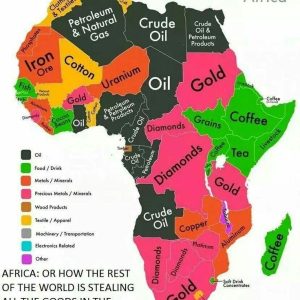
- Resource Variety and Accessibility: Africa holds vast deposits of diverse resources—gold, diamonds, copper, oil, and other minerals that were essential for European industries during the Industrial Revolution. Although other countries, such as Russia and the United States, have significant natural resources, Africa’s resources were relatively untapped and distributed across many regions. This accessibility and variety, combined with European advancements in transportation and mining technology, made Africa an attractive target for colonial powers.
- Geopolitical and Economic Dominance: European powers were in fierce competition for global dominance, and colonies were seen as symbols of national prestige and power. Africa offered a vast area where countries like Britain, France, and Belgium could expand their influence. Controlling African territories allowed these countries to project their power globally, secure trade routes, and exploit African labor and markets.
- Strategic Military and Trade Locations: Africa’s geographic location offered control over key trade routes, particularly around the Suez Canal and the Cape of Good Hope. The Suez Canal, in particular, was a crucial passage connecting Europe to its colonies in Asia and provided an alternative to the lengthy journey around Africa. By controlling African ports and regions, European powers could secure their interests in global trade.
- Labor and Agricultural Potential: Colonizers saw Africa’s population as a labor resource, which they exploited in various industries, from mining to agriculture. The climate in many African regions was also favorable for cultivating cash crops, including rubber, cocoa, and cotton, essential for European industries and economies. Unlike some of the top resource-rich countries, which were either already industrialized or politically independent, Africa’s lands and labor were perceived as “available” for extraction and export.
- Colonial Ideology and “Civilizing” Missions: European colonial ambitions were partly justified by a belief in the supposed cultural and racial superiority of Europeans, who claimed it was their duty to “civilize” African societies. This colonial ideology rationalized the exploitation and occupation of African lands. It provided a moral veneer to what was fundamentally an economic and geopolitical conquest, making the public more supportive of African colonization than they might have been for outright exploitation of other, more industrialized countries.
In short, while other regions also have abundant natural resources, Africa’s relative lack of organized industrial resistance, combined with European political motives and the potential for diverse, untapped resources, made it the prime focus of colonial expansion during the late 19th and early 20th centuries.
The countries with the most natural resources in the world include a mix of those with vast energy reserves, abundant minerals, and fertile land. These resources are pivotal to their economies and global trade. Here’s a summary of some of the top resource-rich nations:
1. Russia
- Resources: Oil, natural gas, coal, timber, and precious metals like gold and platinum.
- Value: Russia is a top producer of natural gas and the world’s second-largest oil exporter. Its vast Siberian forests also contribute to its wealth in timber.
2. United States
- Resources: Coal, oil, natural gas, gold, copper, and timber.
- Value: The U.S. has the largest proven coal reserves and significant shale gas deposits, making it a leader in energy production.
3. Saudi Arabia
- Resources: Oil and natural gas.
- Value: Home to some of the largest oil reserves globally, Saudi Arabia’s economy relies heavily on petroleum exports.
4. Canada
- Resources: Oil sands, natural gas, timber, gold, and uranium.
- Value: Rich in mineral and energy resources, especially in Alberta, Canada is a significant exporter of crude oil and timber.
5. China
- Resources: Rare earth metals, coal, gold, and iron ore.
- Value: China dominates the production of rare earth elements, essential for electronics and renewable energy technologies.
6. Australia
- Resources: Iron ore, coal, gold, natural gas, and bauxite.
- Value: Australia is a leading exporter of iron ore and coal, and its vast deserts house numerous mineral deposits.
7. Brazil
- Resources: Timber, iron ore, gold, oil, and agricultural products.
- Value: The Amazon rainforest provides significant timber resources, and Brazil is also a top producer of iron ore and soybeans.
8. Venezuela
- Resources: Oil, natural gas, and gold.
- Value: Known for having the world’s largest proven oil reserves, although economic mismanagement has hindered its resource potential.
9. Democratic Republic of Congo (DRC)
- Resources: Cobalt, diamonds, gold, copper, and coltan.
- Value: The DRC is a critical supplier of cobalt, vital for batteries in electric vehicles.
10. South Africa
- Resources: Gold, diamonds, platinum, and coal.
- Value: South Africa has some of the world’s largest gold and platinum reserves, driving its mining sector.
Comparisons and Insights:
- Africa’s Unique Role: While not all African countries are listed above, the continent is exceptionally resource-rich, with countries like Nigeria (oil), Ghana (gold), and Zambia (copper) playing significant roles globally.
- Strategic Resources: Countries like China and DRC dominate markets for specific materials like rare earth elements and cobalt, vital for modern technologies.
- Energy Giants: Russia, Saudi Arabia, and the U.S. lead in fossil fuel production, shaping global energy dynamics.
These resources make these countries key players in global trade and geopolitics. However, effective management and environmental considerations are crucial to sustainable exploitation.
