How Hitler Dismantled a Democracy in 53 Days He used the constitution to shatter the constitution. By Timothy W. Ryback
Trump’s actions echo some of Hitler’s early tactics—especially using fear, propaganda, and legal loopholes to erode democracy. However, critical differences, such as institutional checks and a lack of full authoritarian control, prevented him from dismantling American democracy the way Hitler did in Germany.
That said, the lessons of history remain relevant: Democracy is fragile, and its survival depends on vigilance, strong institutions, and the willingness of the people to defend it.
That article by Timothy W. Ryback explores how Adolf Hitler quickly dismantled Germany’s democracy after becoming chancellor in January 1933. By leveraging the existing constitution and legal frameworks, he was able to consolidate power within just 53 days.
Key Points of How Hitler Dismantled Democracy:
-
Appointment as Chancellor (Jan 30, 1933): Hitler was appointed chancellor despite his Nazi Party not having an outright majority in parliament.
-
Reichstag Fire (Feb 27, 1933): The burning of the Reichstag (parliament building) was blamed on communists, creating a national crisis.
-
Reichstag Fire Decree (Feb 28, 1933): Using the fire as justification, Hitler persuaded President Hindenburg to sign an emergency decree suspending civil liberties, allowing mass arrests of political opponents.
-
March 1933 Elections: Amid intense propaganda and suppression of opposition, the Nazi Party gained more parliamentary seats but still lacked a majority.
-
The Enabling Act (March 23, 1933): This law effectively gave Hitler dictatorial powers by allowing him to rule by decree without needing parliamentary approval.
-
Dismantling of Opposition: Once in power, Hitler moved swiftly to ban other political parties, intimidate the press, and integrate state institutions under Nazi control.
By manipulating Germany’s democratic system, Hitler legally established a dictatorship, proving that democratic institutions can be subverted from within.
The rapid collapse of democracy in Germany under Adolf Hitler’s rule is one of history’s most infamous examples of how a democratic system can be legally dismantled from within. Within just 53 days of becoming chancellor on January 30, 1933, Hitler used legal means to eliminate opposition, suppress civil liberties, and consolidate absolute power. His rise serves as a cautionary tale of how authoritarian leaders can exploit democratic institutions to destroy democracy itself.
How Hitler Used the Constitution to Destroy the Constitution
1. The Appointment of Hitler as Chancellor (January 30, 1933)
Before 1933, Germany was a democracy under the Weimar Republic, but it was struggling with economic instability, political division, and widespread discontent. The Nazi Party had gained popularity by capitalizing on national grievances, promising economic recovery, and spreading fear of communism.
Despite the Nazis never winning a majority in elections, conservative elites—including President Paul von Hindenburg and former Chancellor Franz von Papen—believed they could control Hitler by appointing him as chancellor in a coalition government. This decision gave Hitler access to the levers of power while many still underestimated his ability to dismantle democracy.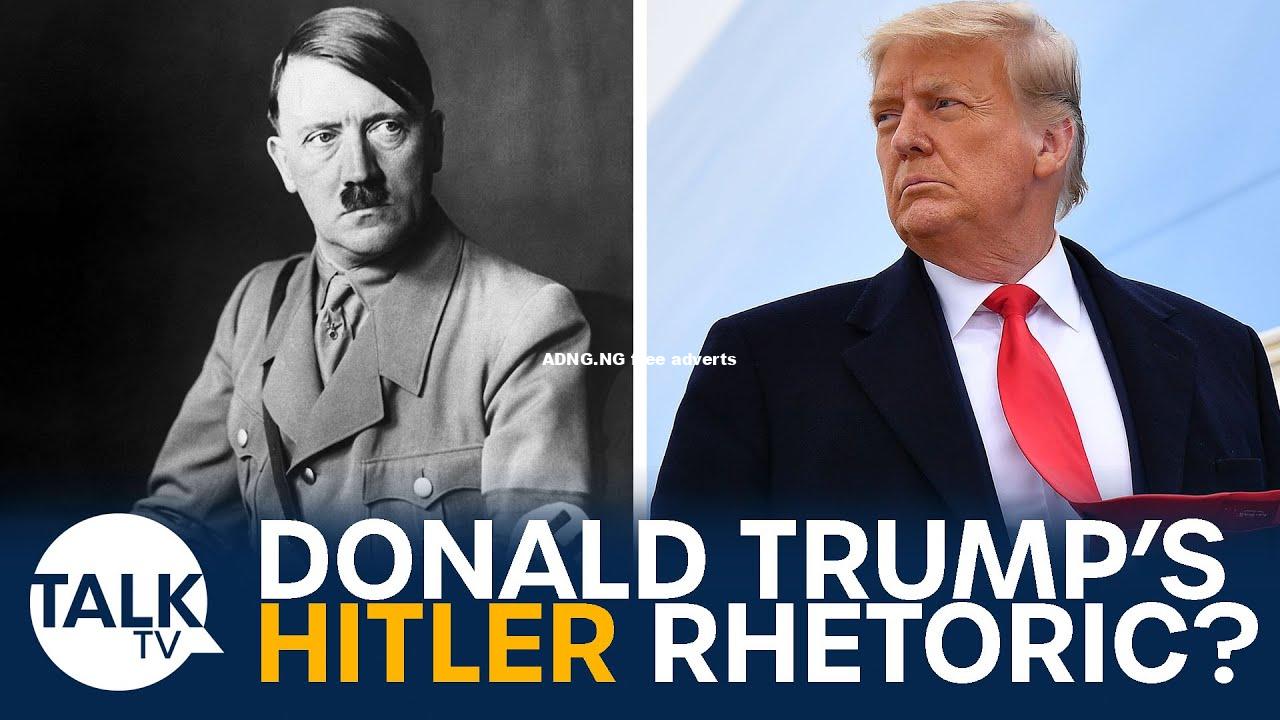
2. The Reichstag Fire (February 27, 1933)
Just four weeks after Hitler became chancellor, the Reichstag (Germany’s parliament building) was set on fire. A Dutch communist, Marinus van der Lubbe, was arrested at the scene and blamed for the attack. Though historians debate whether the Nazis orchestrated the fire or merely exploited it, the event became a turning point in Hitler’s consolidation of power.
The fire was framed as proof of an impending communist uprising, allowing Hitler to demand emergency powers to “protect” Germany.
3. The Reichstag Fire Decree (February 28, 1933)
The day after the fire, Hitler convinced President Hindenburg to sign the Reichstag Fire Decree, officially titled “The Decree for the Protection of the People and the State.” This decree suspended key civil liberties, including:
- Freedom of speech
- Freedom of assembly
- Freedom of the press
- Privacy of postal and telephone communications
Under this decree, the Nazis arrested thousands of political opponents, primarily Communists and Social Democrats, whom they labeled as threats to national security. Many were sent to newly established concentration camps. The decree allowed the government to bypass normal legal procedures and detain people indefinitely without trial.
This single act effectively ended Germany’s democratic protections, yet it was done legally within the framework of the Weimar Constitution.
4. The March 5, 1933 Elections and Nazi Manipulation
With opposition leaders arrested or silenced, the Nazis moved to consolidate political power in the upcoming parliamentary elections. However, despite their intimidation tactics and propaganda, the Nazi Party only secured 43% of the vote—still short of a majority.
To gain control of the Reichstag, the Nazis formed an alliance with the German National People’s Party (DNVP), a conservative group, which gave them a slight majority. However, this was not enough for Hitler’s next move—the passage of the Enabling Act—which required a two-thirds majority.
5. The Enabling Act (March 23, 1933)
The Enabling Act, officially called “The Law to Remedy the Distress of the People and the Reich,” was the final legal step that transformed Germany into a dictatorship. This law gave Hitler the power to enact laws without the Reichstag’s approval, including laws that violated the constitution.
To secure the two-thirds majority needed to pass the law, Hitler used:
- Intimidation: Nazi stormtroopers surrounded the parliament building to pressure politicians.
- Banning Communist Representatives: The Communist Party’s elected officials were either imprisoned or prevented from voting.
- Coercion of Other Parties: The Catholic Centre Party, under pressure from both the Vatican and Hitler’s assurances, voted in favor of the act.
With 444 votes in favor and only 94 against, the Enabling Act passed, effectively ending democracy in Germany. From that moment, Hitler had the legal authority to govern by decree.
6. The Elimination of Opposition (April–July 1933)
Once Hitler secured total power, he moved swiftly to remove any remaining opposition:
- April 1933: The Nazis began purging Jews and political opponents from government positions.
- May 1933: Trade unions were abolished, and union leaders were arrested.
- June–July 1933: All political parties except the Nazi Party were banned, turning Germany into a one-party state.
By July 14, 1933, the Nazi Party was declared the only legal political party in Germany. The dismantling of democracy was now complete.
Lessons for Today: Can Democracy Be Dismantled Again?
The fall of the Weimar Republic shows how a democracy can be legally destroyed from within. Hitler never staged a military coup—he used the system against itself by:
- Exploiting fear (e.g., using the Reichstag fire to justify emergency powers)
- Suppressing opposition (arresting and intimidating political rivals)
- Using legal measures (Reichstag Fire Decree, Enabling Act) to remove checks and balances
Warning Signs in Modern Democracies
While the circumstances of 1933 were unique, history suggests that democracies remain vulnerable to authoritarian takeovers when:
- Leaders exploit crises to expand power (e.g., using national security threats to justify emergency measures).
- Opposition parties are silenced through legal or extralegal means.
- The judiciary and independent institutions are weakened so they can’t check executive overreach.
- The media is attacked or censored to control public opinion.
- Elections are manipulated through intimidation, propaganda, or legal maneuvers.
Hitler’s rise to dictatorship in just 53 days is a stark reminder that democracy is fragile. When legal safeguards are undermined, and the public is manipulated through fear, even a strong democracy can collapse from within. Understanding this history is crucial to recognizing and resisting similar patterns in the modern world.
The comparison between Adolf Hitler’s dismantling of democracy in 1933 and Donald Trump’s actions as U.S. president (and after) is a controversial but important discussion. While Trump has not established a dictatorship, there are parallels in the tactics used to weaken democratic institutions, attack political opponents, and spread misinformation. Let’s break it down:
Key Similarities Between Hitler’s Rise and Trump’s Actions
While the contexts of 1930s Germany and 21st-century America are vastly different, certain strategies used by both leaders bear resemblance.
1. Exploiting National Crises to Expand Power
- Hitler (1933): Used the Reichstag Fire as a pretext to declare a national emergency, suspend civil liberties, and crush political opposition.
- Trump (2020-2021): Attempted to use the COVID-19 pandemic and election fraud claims to challenge democratic norms. He frequently suggested delaying the 2020 election and invoked emergency powers to bypass Congress.
2. Attacking the Media and Spreading Propaganda
- Hitler: Used Nazi propaganda, controlled state media, and spread conspiracy theories to discredit the opposition.
- Trump: Repeatedly called the media the “enemy of the people,” spread misinformation through social media, and relied on right-wing news networks to push false narratives.
3. Demonizing Political Opponents
- Hitler: Blamed communists, Jews, and leftists for Germany’s problems. He used mass arrests and emergency decrees to eliminate rivals.
- Trump: Repeatedly attacked Democrats, the “deep state,” and anyone opposing him, calling for their prosecution. He even pressured his Justice Department to investigate political adversaries like Hillary Clinton and Joe Biden.
4. Undermining Elections and Democratic Processes
- Hitler: Used intimidation, propaganda, and legal maneuvers to prevent fair elections. The Enabling Act gave him unchecked power.
- Trump: Refused to accept the 2020 election results, spread false claims of fraud, and pressured state officials to overturn the results. His allies in Congress attempted to block Biden’s certification.
5. Encouraging Political Violence
- Hitler: Used paramilitary groups like the SA (Brownshirts) to intimidate and attack opponents.
- Trump: Encouraged right-wing extremist groups, refused to condemn white supremacist violence, and incited the January 6 attack on the U.S. Capitol.
Key Differences: Why Trump Is Not Hitler
Despite these troubling parallels, key differences prevent a direct comparison:
-
Trump Lacked Absolute Power
- Unlike Hitler, who had full control of the German government by March 1933, Trump faced resistance from Congress, the courts, and the military.
- His attempts to stay in power after losing the 2020 election were unsuccessful.
-
No Formal Suppression of Civil Liberties
- Hitler’s Reichstag Fire Decree allowed indefinite detention without trial.
- Trump undermined democratic norms but did not legally suspend rights like freedom of the press or assembly.
-
The U.S. System Had Stronger Checks and Balances
- The U.S. Constitution, independent courts, and federalism prevented Trump from consolidating power as Hitler did.
- The FBI, state election officials, and even some Republicans resisted Trump’s efforts to overturn the election.
-
Trump Did Not Ban Opposition Parties
- Hitler quickly outlawed all political opposition. Trump attempted to delegitimize Democrats but never formally banned them.
Could the U.S. Democracy Still Be at Risk?
While Trump did not establish a dictatorship, his tactics revealed vulnerabilities in American democracy:
- Election denialism: The refusal to accept election results threatens the foundation of democracy.
- Attacks on institutions: Undermining courts, Congress, and the media weakens the system.
- Political violence: Encouraging armed groups and extremism could escalate in future elections.
If Trump (or another leader) were to return with more political control, fewer restraints, and a more disciplined strategy, the U.S. could see more significant democratic erosion.
The rapid collapse of democracy in Germany under Adolf Hitler’s rule is one of history’s most infamous examples of how a democratic system can be legally dismantled from within. Within just 53 days of becoming chancellor on January 30, 1933, Hitler used legal means to eliminate opposition, suppress civil liberties, and consolidate absolute power. His rise serves as a cautionary tale of how authoritarian leaders can exploit democratic institutions to destroy democracy itself.
How Hitler Used the Constitution to Destroy the Constitution
1. The Appointment of Hitler as Chancellor (January 30, 1933)
Before 1933, Germany was a democracy under the Weimar Republic, but it was struggling with economic instability, political division, and widespread discontent. The Nazi Party had gained popularity by capitalizing on national grievances, promising economic recovery, and spreading fear of communism.
Despite the Nazis never winning a majority in elections, conservative elites—including President Paul von Hindenburg and former Chancellor Franz von Papen—believed they could control Hitler by appointing him as chancellor in a coalition government. This decision gave Hitler access to the levers of power while many still underestimated his ability to dismantle democracy.
2. The Reichstag Fire (February 27, 1933)
Just four weeks after Hitler became chancellor, the Reichstag (Germany’s parliament building) was set on fire. A Dutch communist, Marinus van der Lubbe, was arrested at the scene and blamed for the attack. Though historians debate whether the Nazis orchestrated the fire or merely exploited it, the event became a turning point in Hitler’s consolidation of power.
The fire was framed as proof of an impending communist uprising, allowing Hitler to demand emergency powers to “protect” Germany.
3. The Reichstag Fire Decree (February 28, 1933)
The day after the fire, Hitler convinced President Hindenburg to sign the Reichstag Fire Decree, officially titled “The Decree for the Protection of the People and the State.” This decree suspended key civil liberties, including:
- Freedom of speech
- Freedom of assembly
- Freedom of the press
- Privacy of postal and telephone communications
Under this decree, the Nazis arrested thousands of political opponents, primarily Communists and Social Democrats, whom they labeled as threats to national security. Many were sent to newly established concentration camps. The decree allowed the government to bypass normal legal procedures and detain people indefinitely without trial.
This single act effectively ended Germany’s democratic protections, yet it was done legally within the framework of the Weimar Constitution.
4. The March 5, 1933 Elections and Nazi Manipulation
With opposition leaders arrested or silenced, the Nazis moved to consolidate political power in the upcoming parliamentary elections. However, despite their intimidation tactics and propaganda, the Nazi Party only secured 43% of the vote—still short of a majority.
To gain control of the Reichstag, the Nazis formed an alliance with the German National People’s Party (DNVP), a conservative group, which gave them a slight majority. However, this was not enough for Hitler’s next move—the passage of the Enabling Act—which required a two-thirds majority.
5. The Enabling Act (March 23, 1933)
The Enabling Act, officially called “The Law to Remedy the Distress of the People and the Reich,” was the final legal step that transformed Germany into a dictatorship. This law gave Hitler the power to enact laws without the Reichstag’s approval, including laws that violated the constitution.
To secure the two-thirds majority needed to pass the law, Hitler used:
- Intimidation: Nazi stormtroopers surrounded the parliament building to pressure politicians.
- Banning Communist Representatives: The Communist Party’s elected officials were either imprisoned or prevented from voting.
- Coercion of Other Parties: The Catholic Centre Party, under pressure from both the Vatican and Hitler’s assurances, voted in favor of the act.
With 444 votes in favor and only 94 against, the Enabling Act passed, effectively ending democracy in Germany. From that moment, Hitler had the legal authority to govern by decree.
6. The Elimination of Opposition (April–July 1933)
Once Hitler secured total power, he moved swiftly to remove any remaining opposition:
- April 1933: The Nazis began purging Jews and political opponents from government positions.
- May 1933: Trade unions were abolished, and union leaders were arrested.
- June–July 1933: All political parties except the Nazi Party were banned, turning Germany into a one-party state.
By July 14, 1933, the Nazi Party was declared the only legal political party in Germany. The dismantling of democracy was now complete.
Lessons for Today: Can Democracy Be Dismantled Again?
The fall of the Weimar Republic shows how a democracy can be legally destroyed from within. Hitler never staged a military coup—he used the system against itself by:
- Exploiting fear (e.g., using the Reichstag fire to justify emergency powers)
- Suppressing opposition (arresting and intimidating political rivals)
- Using legal measures (Reichstag Fire Decree, Enabling Act) to remove checks and balances
Warning Signs in Modern Democracies
While the circumstances of 1933 were unique, history suggests that democracies remain vulnerable to authoritarian takeovers when:
- Leaders exploit crises to expand power (e.g., using national security threats to justify emergency measures).
- Opposition parties are silenced through legal or extralegal means.
- The judiciary and independent institutions are weakened so they can’t check executive overreach.
- The media is attacked or censored to control public opinion.
- Elections are manipulated through intimidation, propaganda, or legal maneuvers.
Hitler’s rise to dictatorship in just 53 days is a stark reminder that democracy is fragile. When legal safeguards are undermined, and the public is manipulated through fear, even a strong democracy can collapse from within. Understanding this history is crucial to recognizing and resisting similar patterns in the modern world.
Would you like to discuss specific parallels with contemporary politics ?
your Comments below are welcome