

 Written by
 Hulk’s fear of Thanos, as depicted in the Marvel Cinematic Universe (MCU), is a multifaceted issue that combines physical, psychological, and narrative elements. Here are some key reasons why Hulk is still afraid of Thanos:
1. Physical Defeat:
- Avengers: Infinity War opens with Hulk confronting Thanos directly, only to be swiftly and decisively defeated. Thanos overpowers Hulk without even using the Power Stone, showcasing his sheer strength and combat skills. This defeat is not just a physical one but also a blow to Hulk’s confidence.
2. Psychological Trauma:
- Bruce Banner and Hulk have a complex relationship. Hulk is often portrayed as the manifestation of Banner’s anger and desire to protect himself. Being utterly defeated by Thanos shatters Hulk’s sense of invincibility, leading to a kind of psychological trauma. It’s a reminder that there are beings more powerful than him, making him reluctant to face Thanos again.
3. Identity Crisis:
- Throughout the MCU, Hulk grapples with his identity and his place in the world. After the defeat by Thanos, he undergoes a kind of existential crisis, questioning his role as the “strongest Avenger.” This internal struggle exacerbates his fear and reluctance to confront Thanos.
4. Narrative Development:
- Hulk’s fear and subsequent reluctance to emerge is also a narrative tool. It allows the story to explore the dynamics between Hulk and Banner, leading to their eventual reconciliation and the emergence of “Smart Hulk” in Avengers: Endgame. This character development arc is essential for showing growth and change in Hulk’s character.
5. Symbolic Representation:
- Hulk’s fear of Thanos can also be seen as a symbolic representation of dealing with trauma and abuse. Thanos, as a bully, represents an overpowering force that breaks the spirit of even the strongest individuals. Hulk’s journey to overcome this fear mirrors the struggle of many who face and eventually overcome their own fears and traumas.
6. Childhood Trauma Analogy:
- The analogy of an abused child’s idea of a strong man ties into Hulk’s characterization. Hulk can be seen as a child-like entity, with his actions and emotions often being primal and straightforward. Thanos, being the abuser, instills a fear that is deep-rooted and hard to overcome, similar to how childhood trauma affects individuals long into their adult lives.
Conclusion
Hulk’s fear of Thanos is not just a simple case of being afraid of a stronger opponent; it’s a complex mix of physical defeat, psychological trauma, identity crisis, and symbolic representation of deeper themes. This fear serves as a crucial element in Hulk’s character development, allowing for a richer and more nuanced portrayal of one of Marvel’s most iconic heroes.
The Incredible Hulk’s incredibly toxic masculinity
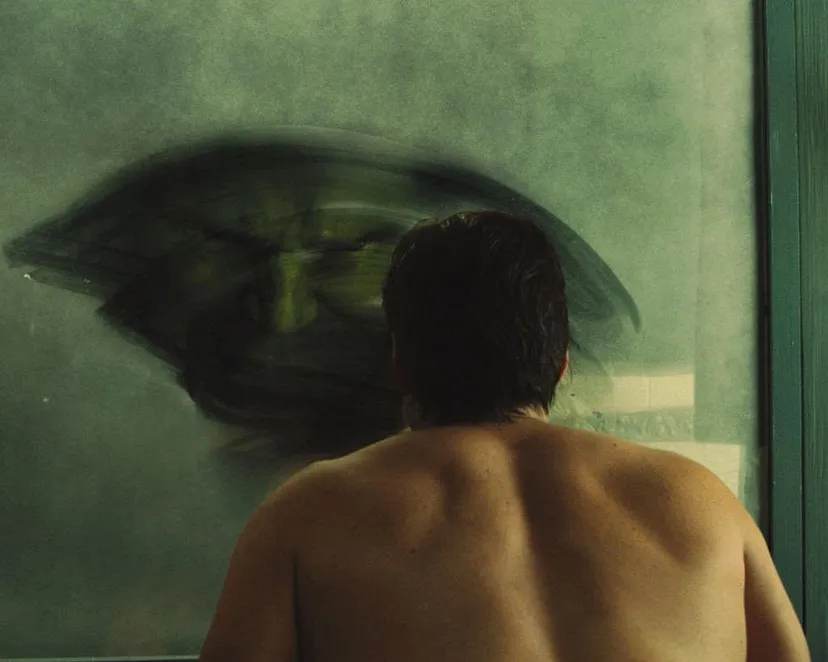
What does our kid-friendly green screen giant have in common with unhealthy masculinity? In Ang Lee’s often-forgotten Hulk (2003) film, the audience sees Bruce Banner’s childhood from his perspective, watching his parents fight behind closed doors, with only rageful screams passing through the walls. His father then attempts to kill him but inadvertently kills his mother instead. As he hears their caregivers’ cries, boy Banner plays with his monster toys, making a make-believe fight to distract him from the real one that will define his life thereafter. A deeply adult theme in the teal titan’s origin that perhaps Disney wants the audience to forget as well. But even in Josh Whedon’s Avengers (2012), a different actor playing a different Banner mentions his attempted suicide, which his alternate personality foils. Hulk has always been given the appearance of simplicity; physically, he’s a big green power fantasy — eye-catching and easy to spot on toy aisles — hiding dark psychological horrors beneath.
Cohabitation
A scientist who turns himself into a monster, where have we heard that before? Hulk’s co-creator Stan Lee even stated that the jade jumbo was inspired by the classic tale of Dr. Jekyll and Mr. Hyde. In that original story, Cohen (2003) argues that the dual person inside one male body is a symbol of the antinomies of masculinity. He looks at it as the strict rule-bound Victorian world that Dr. Jekyll lived in then didn’t allow transgressive masculine expression that only Mr. Hyde could provide. This contradiction gave birth to the compartmentalization of personalities that would mark the custom of masculinity til this day.
In Al Ewing’s seminal Immortal Hulk (2018) run, Hulk himself (not Banner) declares how he is a result of Banner’s traumatic childhood, a defense mechanism comes to life, the physical manifestation of abuse. If Freud were here, he’d have a field day saying perhaps that this alternate identity is a psychological reaction to defend Banner’s inner child from danger, specifically from further abuse. Hulk exists so Banner will never be abused again, so he will never have to experience that pain in the future. But it’s a cycle, an action or reaction taken in anger is never rational, so the bullied becomes a bully, the abused an abuser, and Banner the scientist becomes the Hulk who smashes.

The left hand is strength
In Bell Hooks’ book The Will to Change (2004), she proposes that Hulk is the embodiment of masculine sentiments that people too easily accept. Sentiments that rational men (Dr. Banner) can become monsters (Hulk), because violence is innate in them, which is why men were often not held accountable for their monstrous tendencies. She argues that this mustn’t be the case, that people must imagine a better reality, for both men and women. A reality where violence is never an acceptable alternative, and where everyone takes responsibility for any monstrous act. She also tells of Banner’s inability to love as a result of his disassociation with his violent double. Banner intends to cure himself of the Hulk, not making peace with his counterpart, but separating himself completely from that responsibility. In another chapter of the book, she proves that suicide is more prevalent in men and that some commit suicide because of their inability to follow traditional masculine ideas; their selves not fitting the mold, they feel they are relegated to a binary choice of either killing their souls or their own bodies.
This is also the case when talking about Hulk. In an attempt to solve the dichotomy between his two selves, and especially to prevent further death and destruction in his wake, Banner has tried to kill himself on multiple occasions, always unsuccessfully. Banner tries to protect the world from Hulk, while Hulk protects Banner from himself. Not dissimilar to how over the years toxic masculinity has trained men to not express weakness, to be solitary and strong, to take the pain and bury it deep. This is what Hulk does to Banner, he avoids other people because he fears hurting them. Being alone and on the run is framed as moral for him, a sacrificial penance the good doctor willingly bears on his skinny shoulders.

Beast Beneath
There’s a trope most noticeable in young adult media, of women being attracted to men who are secretly monsters (look at Teen Wolf or Twilight). This sets the precedent as if it’s a fantasy for women to be with men who are not whole, men who are kind during the day and violent at night. In the Hulk mythos, he has always had one person who stayed consistent as a love interest, Betty Ross. Betty is the damsel to Banner’s King Kong, his anchor to humanity, but she never had to be. According to Wood (2015), the traditional take on werewolves is that they are the beasts within men and that women have an exclusive role in taming them.
In Ewing’s Immortal Hulk, Betty (who has hulked out herself) relays her feelings to the green goliath. She talks about their relationship dynamic, their cycle: hide and seek, up and down, day and night, love and violence, Banner and Hulk. Banner will never truly love Betty since there is always a part of him that’s sheltered, radiation-induced masculinity doesn’t let him open his heart fully, and his trauma doesn’t let him trust anyone completely. Perhaps some young women like men who repress violence because it seems noble and powerful; they can be cruel monsters but they can also be kind and loving, as if men had to be one to do the other. Instead of promoting emotional maturity and therapy, both men and women make do with binary states of being, and accept things as if the alternative is unthinkable. Or maybe this just makes for good dramatic conflict.
It’s like Betty loves Banner because of how he contrasts with the Hulk, because of his ability to hold back immeasurable anger, and his supposed strength in repressing it. Like a roided-out rollercoaster, the lows define the highs, and Hulk’s rage accentuates Banner’s kindness. The pattern of their toxic relationship is as follows: Betty waits for Banner to emotionally open up, to be vulnerable, but being vulnerable reminds Banner of his childhood pain, of father’s fists; he equates vulnerability with weakness, so instead he bursts out in anger. All the while Hulk hides from intimacy and escapes commitment through the guise of self-hate, the rationale of protecting others from himself, the tortured savior. The Avengers, so-called heroes, even use Hulk for their own purposes, as a soldier. As if Banner is not allowed to be meek and weak, as if masculine anger is pragmatic and collateral damage is necessary for the “greater good.”

The right hand is mercy
For Hulk’s psyche, fighting is just another way of fleeing, to make narrative sense of his trauma, both psychologically and physically. What else should he do, irradiated and deformed, except be a monster? But what if there’s another way? What if Hulk and the rest of real-world traumatized men just lack the imagination for a better future? Bell Hooks stated in her book that men must reflect on their boyhoods, on why they’ve become who they are now, to achieve wholeness. Both Hulk and Banner had to realize their respective reasons for existing and converse internally, to discover that better future beyond the cycle.
Like most kids, I used to wear Hulk gloves in the toy section too, playing pretend I was strong, I was big. But maybe the true sign of strength is not a clenched fist for crushing, but an open palm for forgiving. Only by accepting our traumatic past, welcoming it with open arms as a part of ourselves, and admitting complicity in our actions, can we even begin to heal. We are not separate pieces, there is no quintessentially good and bad version of us. As human beings, we must embrace all our parts, even the ugly bits, and take responsibility for them. Hurt begets hurt, and the Hulk’s tragic tale teaches us that a cure — if there ever was any — to male pain, is the opposite of compartmentalization, it’s wholeness. Banner must reconcile with Hulk, the present with the past, the rational with the resentful, and the man with the boy.


