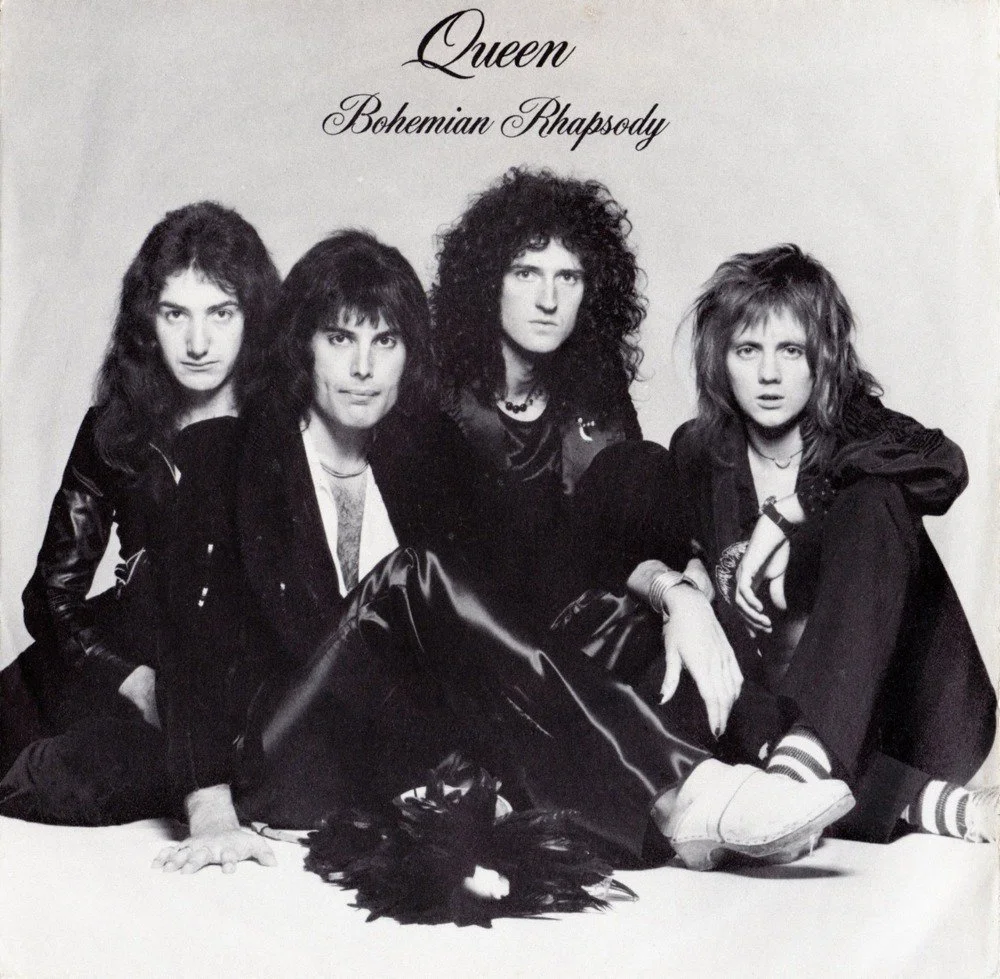
WHY IS THE SONG “BOHEMIAN RHAPSODY” CALLED THAT? WHAT IS THIS SONG REALLY ABOUT?
Today, I want to talk to you about an iconic song whose story is largely unknown, as well as why it has become a cornerstone in the history of Western music. As a musician, I enjoy understanding the meaning behind certain compositions and their origins.
This post is the result of a special research effort, and I hope you find it interesting.
Shall we begin? Yes, let’s begin.
“Bohemian Rhapsody” was first heard on October 31, 1975. It is titled this way because a “rhapsody” is a free-form musical piece composed of different sections and themes, where no part seems directly related to another. The word “rhapsody” comes from Greek and means “assembled parts of a song.” The term “bohemian” refers to a region in the Czech Republic called Bohemia, the birthplace of Faust, the protagonist of the play bearing his name, written by playwright and novelist Johann Wolfgang von Goethe.
The composition by Queen encapsulates an entire literary and musical tradition, and its references to various religions further enrich its meaning, making it the masterpiece that went down in history—not only musically but also through its groundbreaking music video. This video helped mythologize the band and their frontman, partly due to the bold decision to produce a song that significantly exceeded the standard three-minute radio format. Because this was not just a simple song—it was a rock poem!
In Goethe’s work, Faust is an old man of great intelligence who knows everything except the mystery of life. Unable to comprehend it, he decides to poison himself. Just at that moment, the church bells ring, prompting him to go outside. When he returns to his room, he finds a dog, which then transforms into a man-like being. This is the devil, Mephistopheles, who promises Faust a fulfilling life free from unhappiness in exchange for his soul. Faust agrees, regains his youth, and becomes arrogant. He meets Gretchen, and they have a child, but both his wife and child die. Faust travels through time and space, feeling powerful. However, as he ages again, he finds himself once more unhappy. Because he has not broken his pact with the devil, angels battle over his soul.
This story is essential to understanding Bohemian Rhapsody.
The song is, in fact, about Freddie Mercury himself. Since it is a rhapsody, it consists of seven distinct sections:
1. A cappella introduction
2. Ballad
3. Guitar solo
4. Opera section
5. Rock section
6. Outro (or final act)
The lyrics tell the story of a poor young man who questions whether life is real or just a product of his distorted imagination. He says that even if he were to die, the wind would continue to blow as if his existence never mattered. He then makes a deal with the devil and sells his soul.
After making this decision, he runs to tell his mother and confesses:
“Mama, just killed a man, put a gun against his head, pulled my trigger, now he’s dead. Threw my life away. If I’m not back again this time tomorrow, carry on as if nothing really matters…”
The man he has “killed” is himself—Freddie Mercury, symbolically speaking.
If he does not fulfill his pact with the devil, he will die immediately. He bids farewell to his loved ones, and his mother bursts into tears—tears and desperate cries that resonate through Brian May’s guitar notes. Freddie, terrified, cries out: “Mama, I don’t wanna die,” and the operatic section begins.
At this point, Freddie entrs an astral plane where he sees himself: “I see a little silhouetto of a man.” Then comes the line, “Scaramouche, will you do the Fandango?”
Scaramouche refers to a minor skirmish, a battle between forces—possibly alluding to the Four Horsemen of the Apocalypse representing evil, fighting against the forces of good for Freddie’s soul. He continues: “Thunderbolt and lightning, very, very frightening me.”
This phrase appears in the Bible, specifically in Job 37, where it says: “The thunder and lightning frighten me; my heart pounds in my chest.”
Seeing her son so afraid, the mother pleads with God to save him from his pact with Mephistopheles:
“He’s just a poor boy… Spare him his life from this monstrosity. Easy come, easy go, will you let me go?”
Her prayers are heard, and angels descend to fight the forces of evil. “Bismillah!” (an Arabic word meaning “In the name of God”) appears, which is the first word in the Quran. Then, God himself intervenes, proclaiming: “We will not let you go!”
Faced with such a battle between good and evil, Freddie fears for his mother’s life and cries: “Mama mia, mama mia, let me go!” But the angels reaffirm: “We will not let you go!”
Freddie then sings: “Beelzebub has a devil put aside for me.” Here, he pays homage to Wolfgang Amadeus Mozart and Johann Sebastian Bach when he sings: “Figaro, Magnifico,” referencing The Marriage of Figaro (considered the greatest opera in history) and Bach’s Magnificat.
The operatic section ends, and the rock segment begins. The devil, furious at Freddie’s betrayal for not upholding the pact, sneers:
“So you think you can stone me and spit in my eye? So you think you can love me and leave me to die?”
It is striking how the Prince of Darkness appears powerless in the face of human free will, repentance, and love. Having lost the battle, the devil departs, leading to the final act, or coda.


