FROM MEXICO TO THE WORLD
Honeypot ants, also called honey ants, are ants which have specialized workers that consume large amounts of food to the point that their abdomens swell enormously. Other ants then extract nourishment from them, through the process of trophallaxis. They function as living larders
In Oaxaca there is a honey ant  existe known so because its tummy is filled with a delicious honey that you can extract and then let go to the little ant
existe known so because its tummy is filled with a delicious honey that you can extract and then let go to the little antIn the Oaxaque villages it is known as chindudis and is a variety of ant that produce honey only that instead of depositing it in a honeycomb, generate a bag next to its stomach that inflates outwards while being filled with the sweet flavor, which extracted overnight of floral nectars. They belong to desert areas and can be found in some communities, especially in the Mixteca area, when there is no rain.
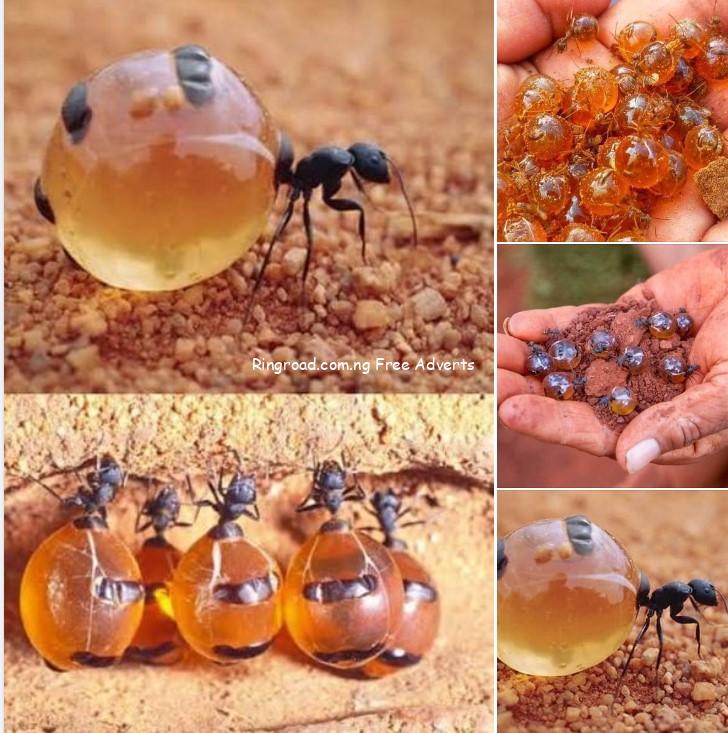
They are known by different names: Chindudis, Tiocondudi, Botijas, Tioko Ntudi (variant of Mixteco meaning honey ant), Vinitos, Binguinas, among others, as the name varies in different villages. You just have to dig a little during the day where you see an ant and you will find this sweet treat, although its taste is sweet it has a wide range of floral flavors. Don’t hurt them, you can extract the honey from their tummy and let them go, they will fill their belly again over night.
Honeypot ants, also known as honey ants, are fascinating creatures with a unique adaptation for survival in harsh environments. Here’s a breakdown of their special features:
- Living larders: These ants have specific worker ants called repletes, whose abdomens become engorged with nectar. These repletes essentially turn into living food storage units for the colony.
- Swollen abdomens: Repletes develop hugely distended abdomens that can store large amounts of nectar, resembling grapes in size.
- Trophallaxis: When food is scarce, other worker ants can request a sugary snack from the repletes through a process called trophallaxis. During trophallaxis, the replete ant regurgitates a small amount of nectar for the other ant to consume.
- Desert dwellers: Honeypot ants are primarily found in arid environments like deserts in Australia, Mexico, and the southwestern United States. These areas tend to have periods of plenty followed by stretches with scarce resources, making the honeypot ant’s food storage strategy very beneficial.
Honeypot ants are a prime example of how insects have evolved ingenious adaptations to thrive in challenging environments. Their ability to store food internally ensures the colony’s survival during lean times.


